.png)
.jpg)
Read article
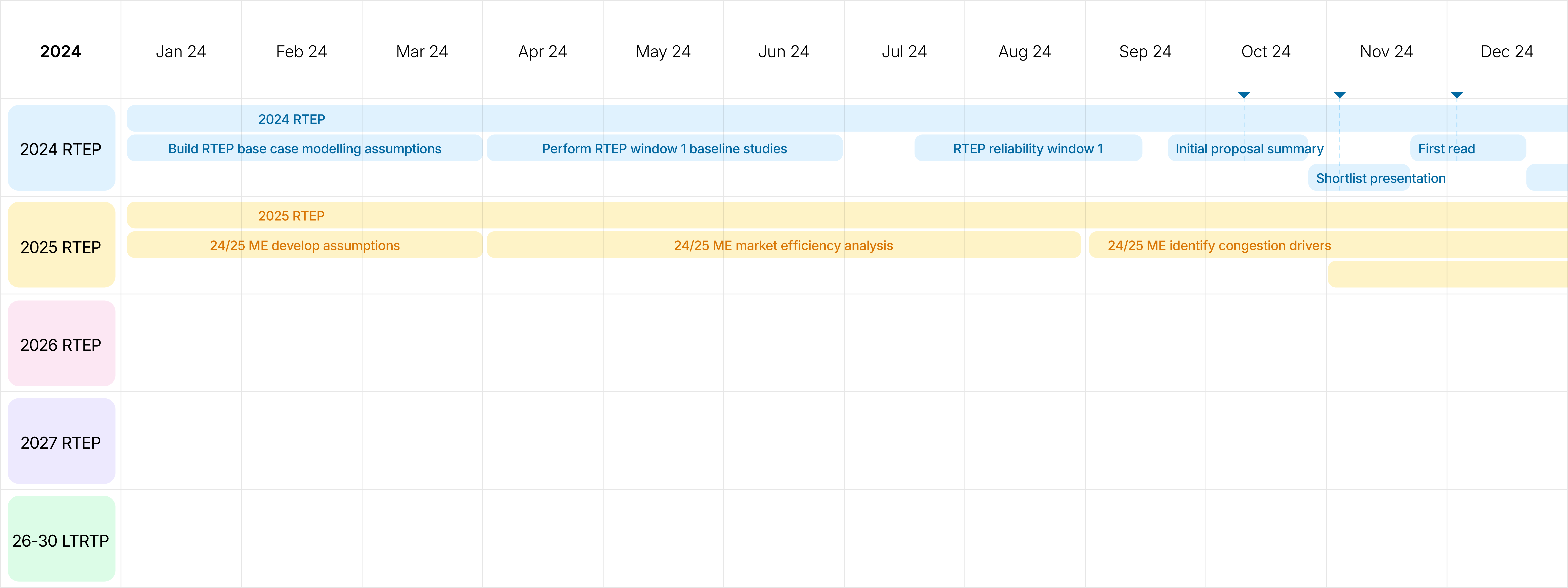
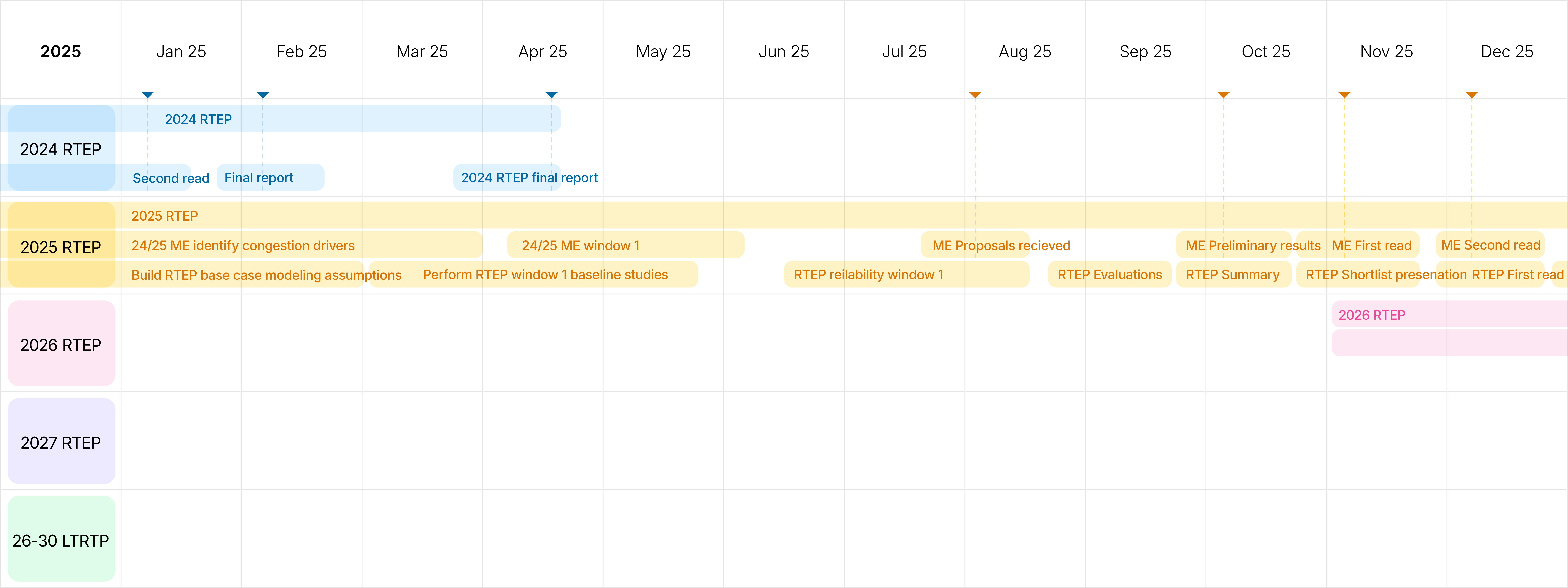
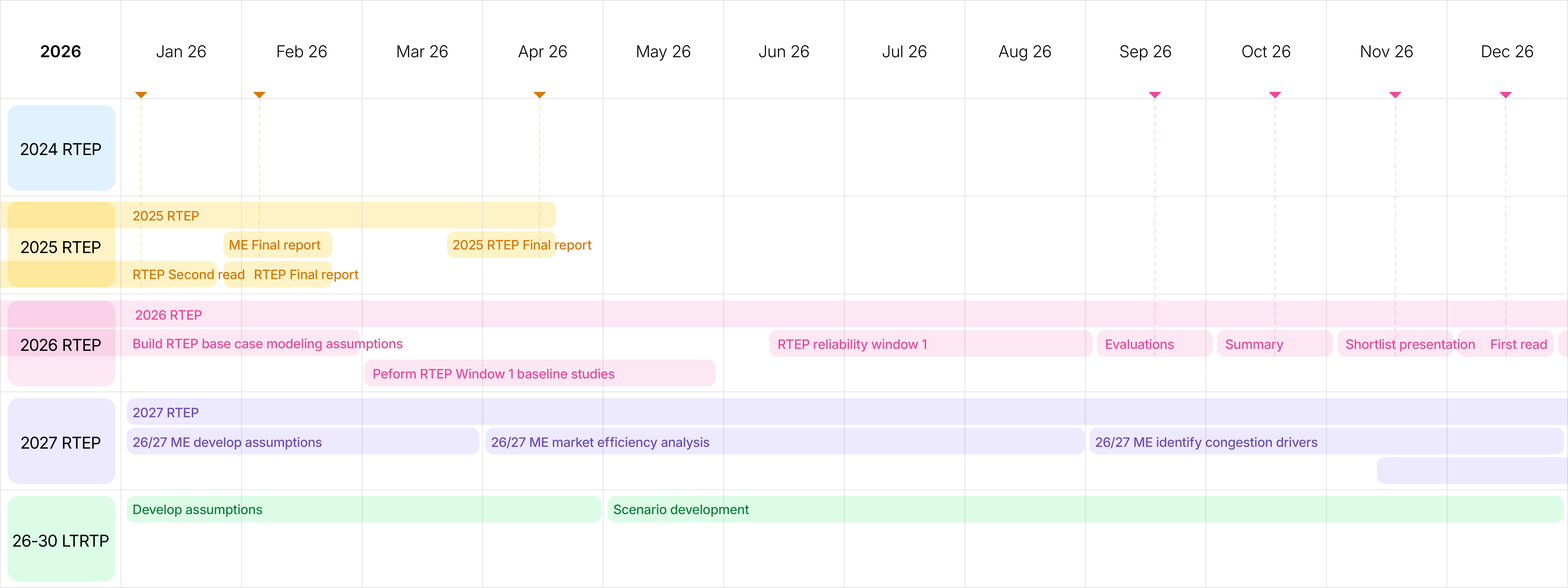
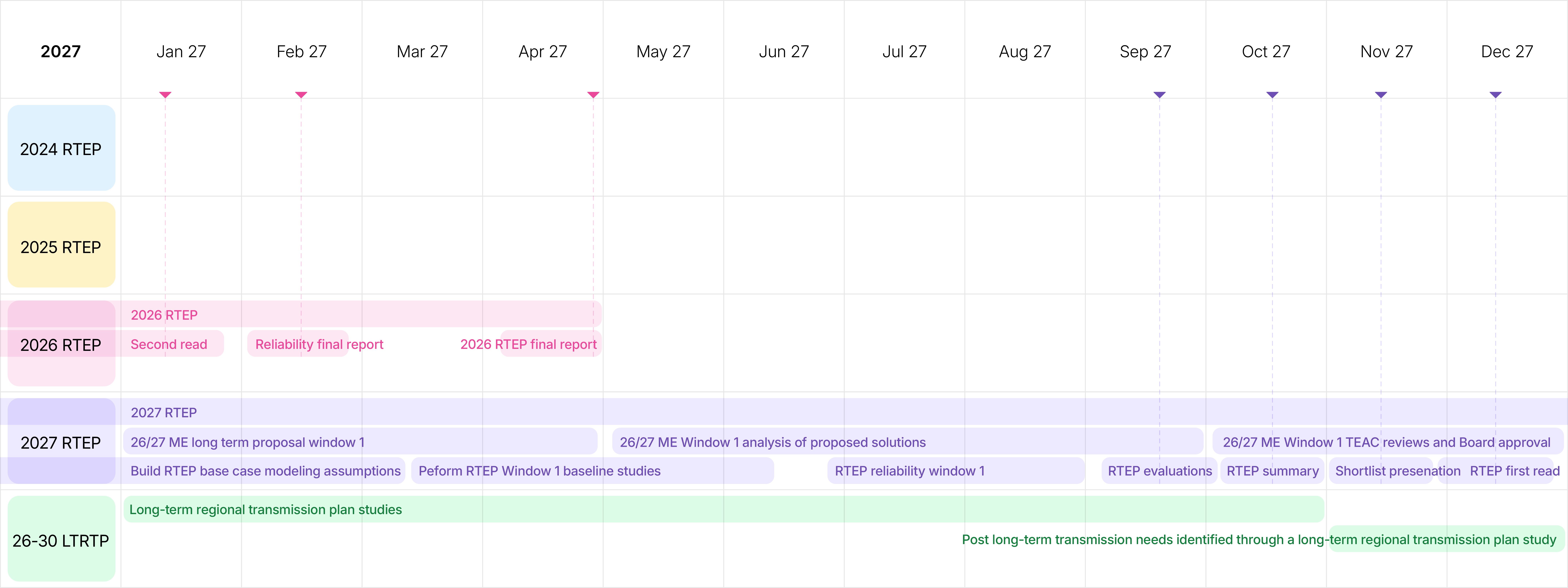
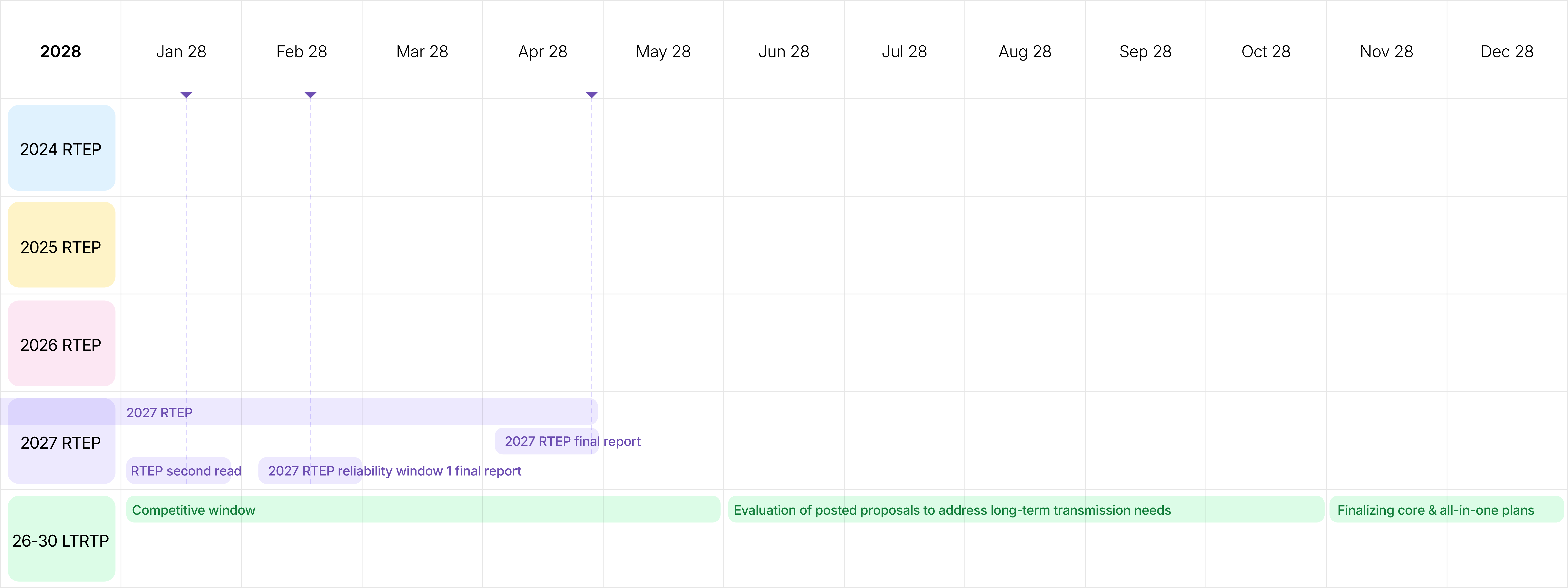
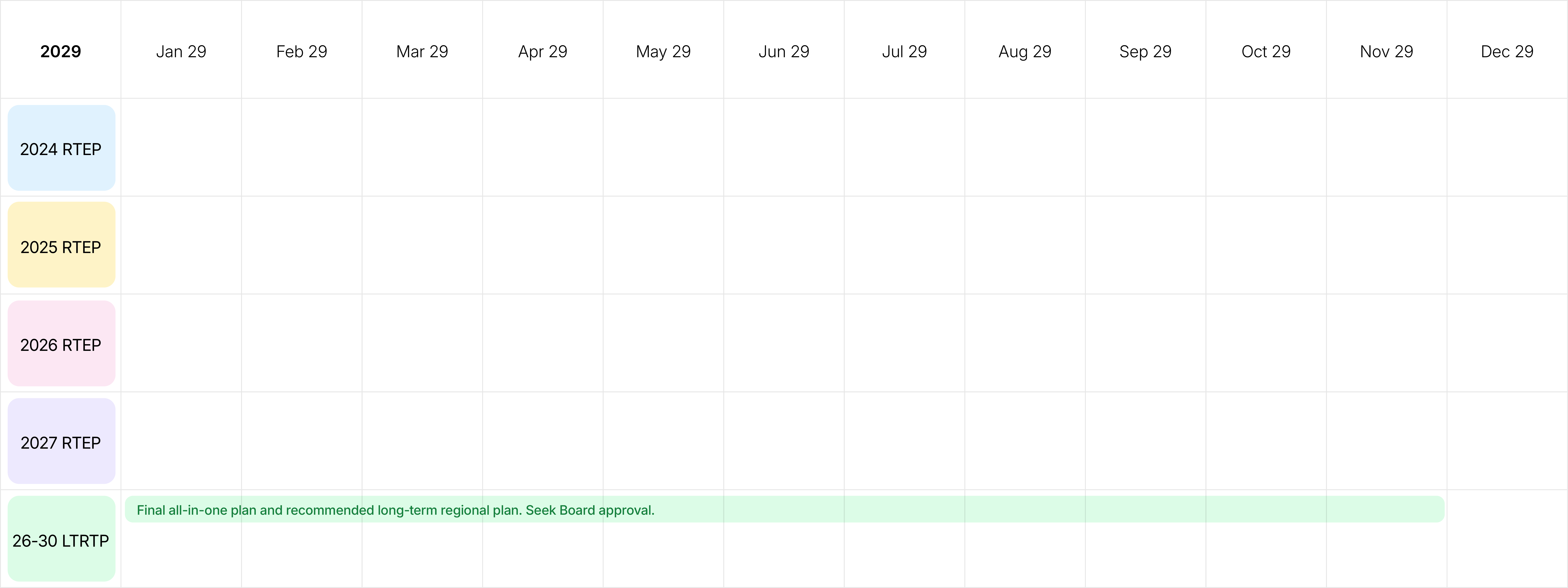
PJM solicits transmission proposals during each RTEP window to address one or more identified needs: reliability, market efficiency, operational performance and/or public policy.
In accordance with FERC Order 1000, RTEP windows offer incumbent and non-incumbent transmission developers the chance to submit project proposals to PJM for consideration.
After a window closes, PJM performs analytical, constructability, and financial evaluations to determine which proposals may be recommended to the PJM Board.
Designated developers of selected projects are then responsible for construction, ownership, operation, maintenance, and financing. (PJM, 2026)
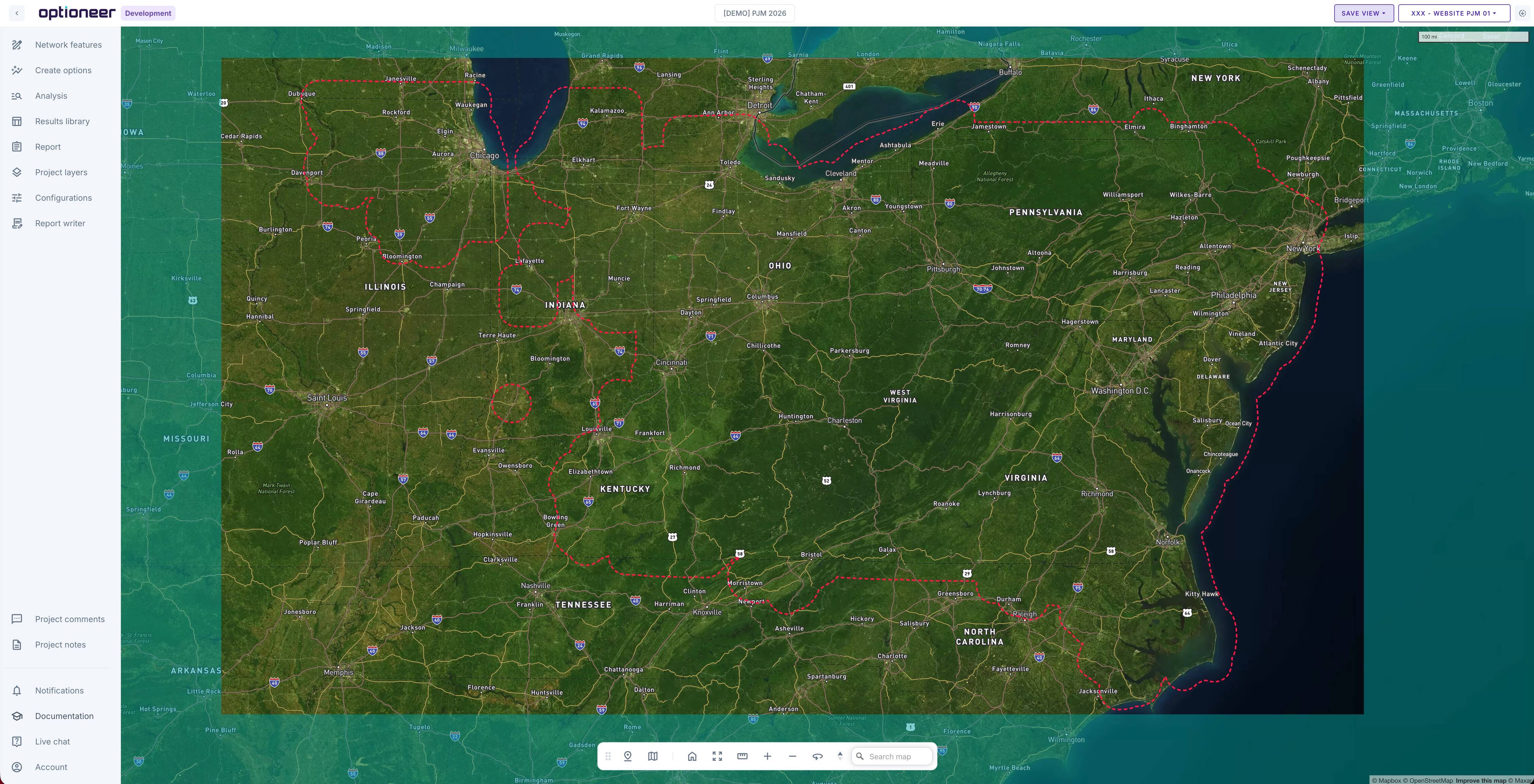
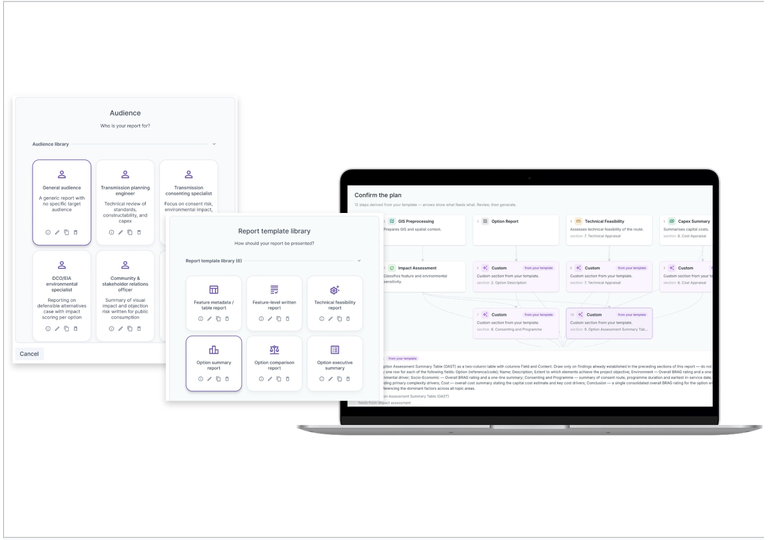
To see how Optioneer fits into this process, here's how a utility or developer's bidding team approaches a PJM RTEP window using Optioneer.
Prior to the window opening, the bidding team sets up a PJM project space in Optioneer and supplements our baseline GIS data with their own data. Our baseline includes 8,000+ federal, state, and 3rd party datasets — including ISO-wide land ownership, zoning, and land use data, detailed existing asset views from providers like Open Infrastructure Map, and accessible, ready-to-use GIS data for siting of transmission assets.
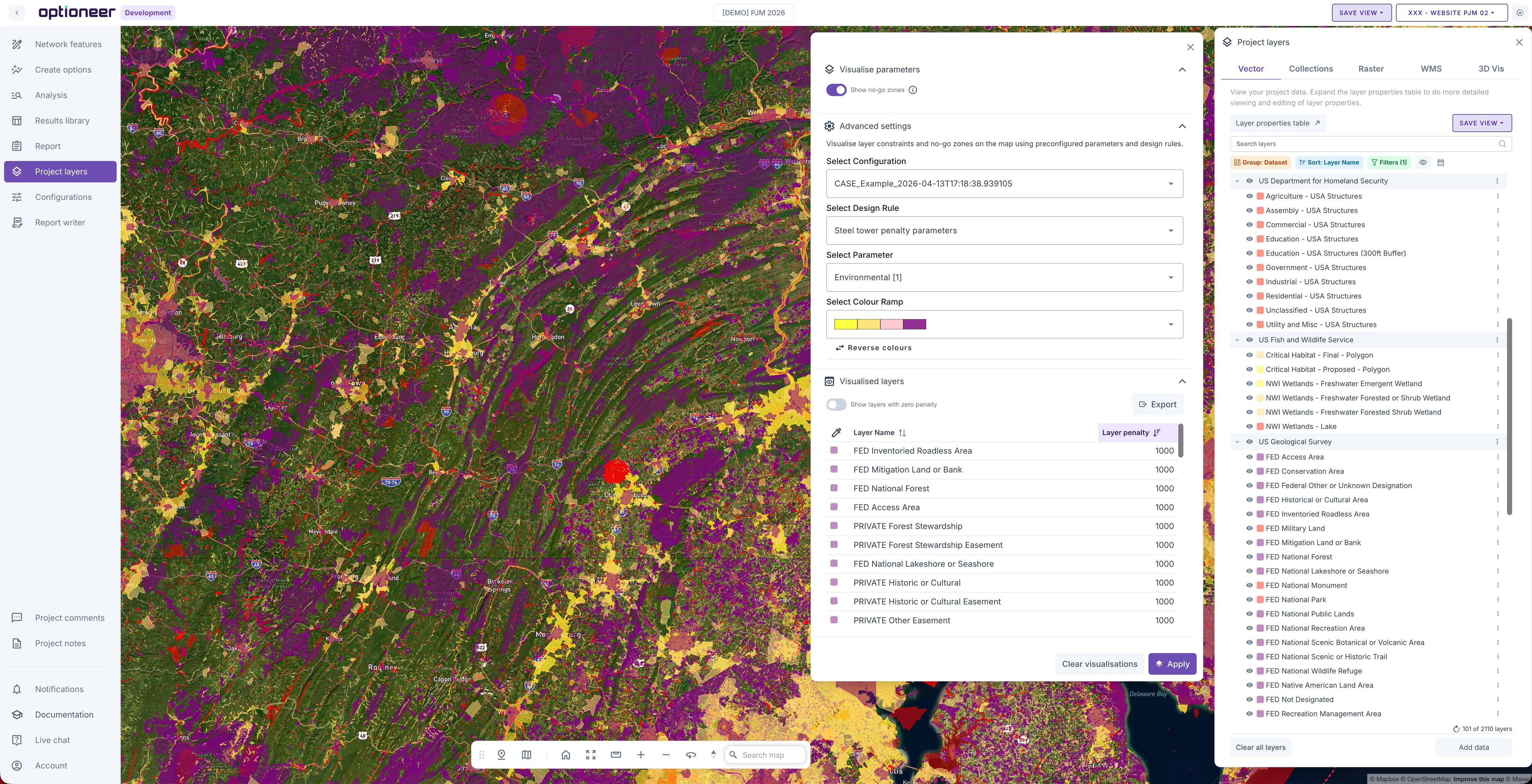
Then, the team works with one of our customer success engineers to build out a configuration that reflects their routing methodology. Configurations tell the engine how to perceive constraints, apply technical engineering rules, and optimize routes. This allows teams to assign weightings to project layers, calculate relevant metrics, and set limits like maximum elevation, slope, or angle change. For example, a configuration might express a preference for parallel routing close to an existing right-of-way, instruct the engine to avoid federal land entirely, or define rules that allow a line to span wetlands without placing towers within them.
Configurations can also specify conditions under which undergrounding should be considered, such as crossings through dense urban areas or locations where above-ground construction would face significant permitting obstacles.
Shortly before the window opens, PJM releases the base case model, a snapshot of the current transmission topology that system planners use to run contingency analyses and identify candidate solutions to resolve thermal, voltage, and reliability violations across the system.
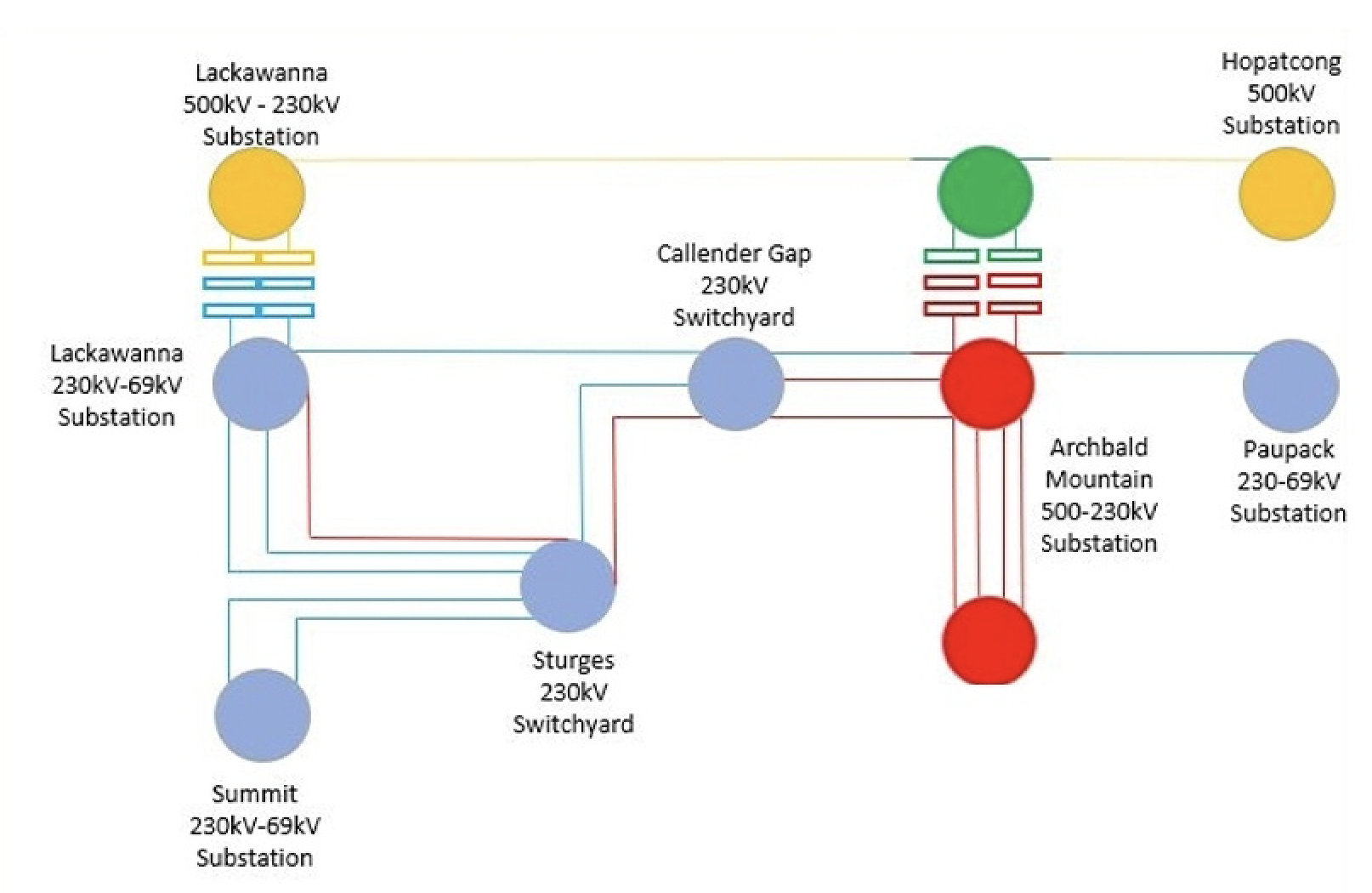
Once candidate solutions are identified, the bidding team feeds the end points and voltages into Optioneer (whether for a rebuild, upgrade, or new greenfield line) and the platform generates feasibility studies evaluating each project against environmental, permitting, and constructibility constraints. Optioneer can generate 100% of the metrics for the PJM Constructability & Cost Analysis Report's Environmental and Regulatory sections and produce a Class 3 AACE cost estimate.
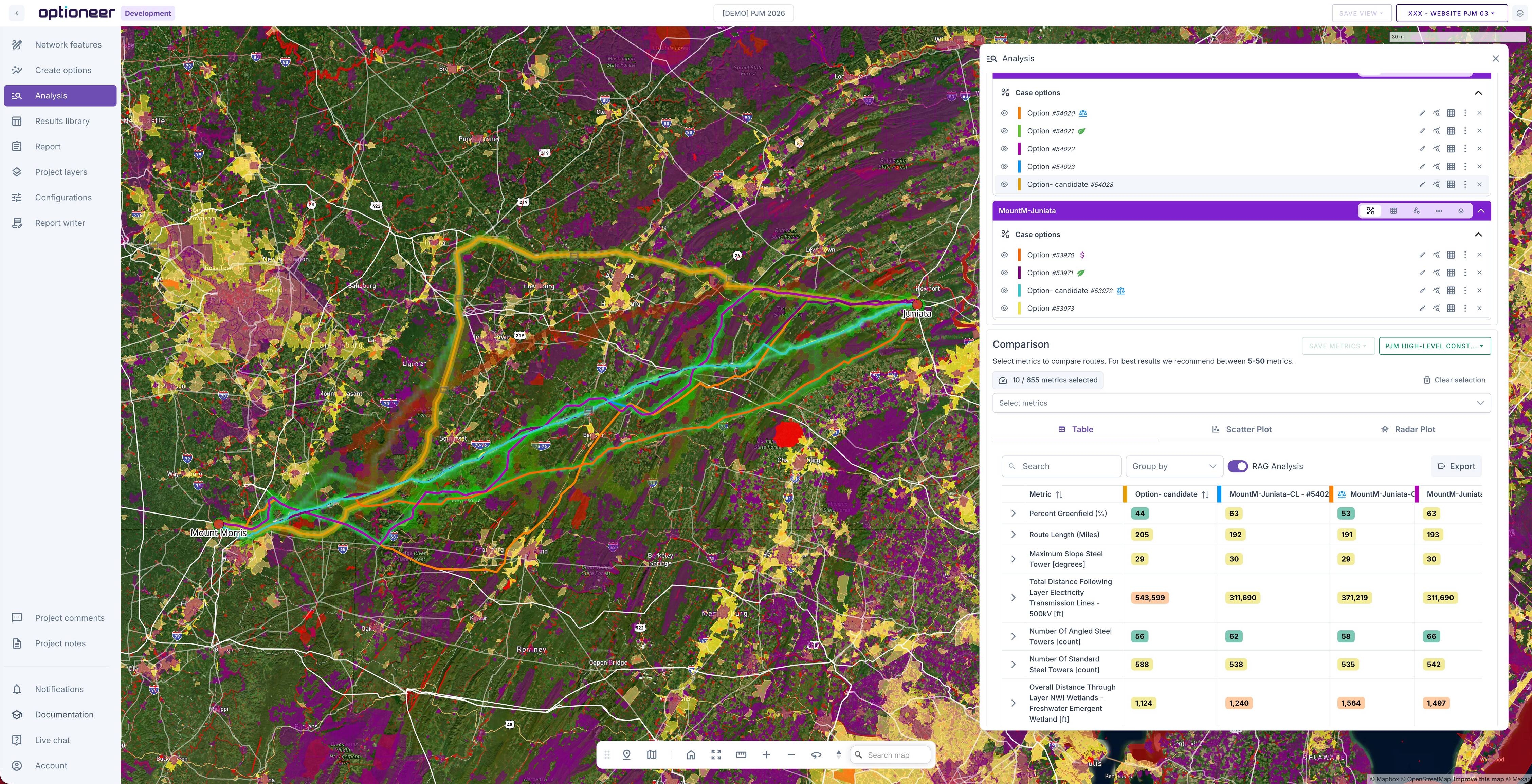
Finally, the bidding team selects the proposals that best resolve system violations and pass environmental, permitting, and constructibility feasibility reviews, then submits their most competitive and viable solutions to PJM.
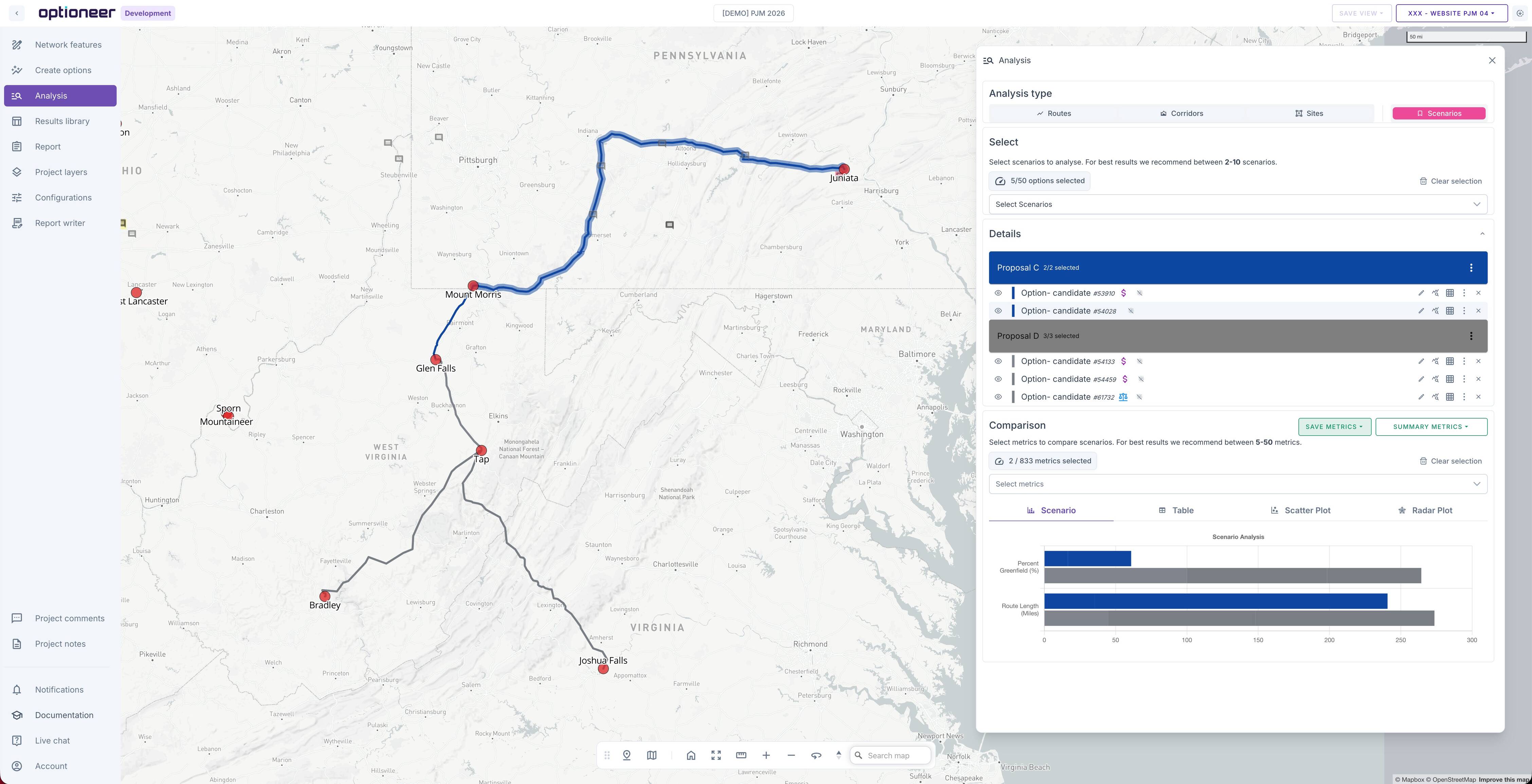
During the 2025 RTEP Window, 2 SMEs at a single utility evaluated 130 projects spanning 9,597 miles in 3 weeks using Optioneer. Developers and utilities behind 62% of the awarded portfolio that cycle were Optioneer users.
Lauren Jasper
Industry Research Lead
lauren.jasper@continuum.industries