Understanding CAISO's TPP: How Optioneer Supports the Process
Lauren Jasper
·
No items found.
CAISO TPP Overview
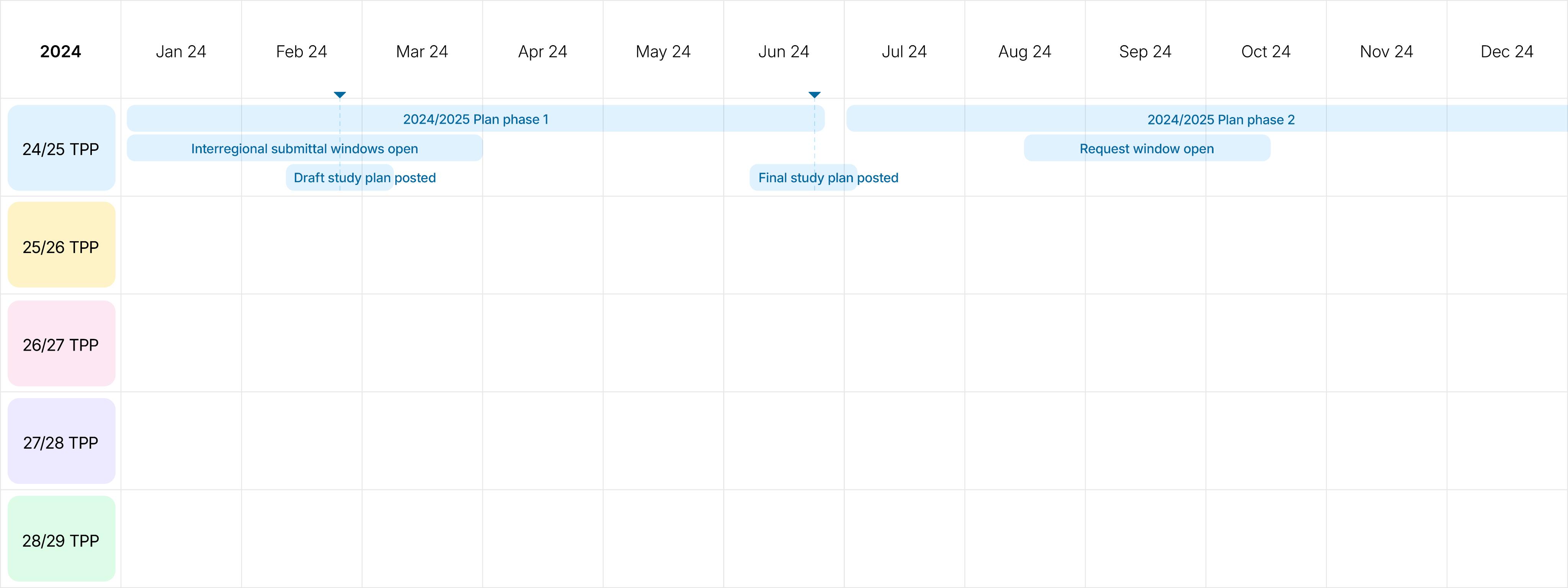
Each year, CAISO conducts its transmission planning process (TPP) to identify system limitations as well as opportunities for system reinforcements that improve reliability and efficiency (California Independent System Operator, 2026).
The TPP is split up into 3 phases:
Phase 1: Development of unified planning assumptions and study plan.
Phase 2: Performance of technical studies, and the development of the transmission plan
Phase 3: Competitive solicitation process and project sponsor selection for certain identified regional transmission facilities
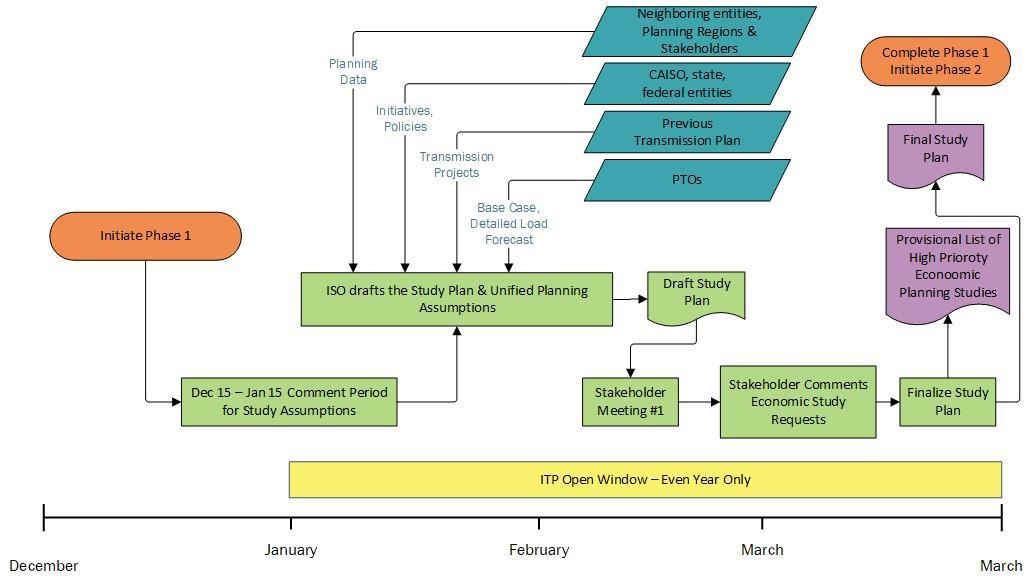
Phase 1
(California Independent System Operator, 2026)
During Phase 1, which spans 4 months, CAISO develops the unified planning assumptions that will guide the year's Transmission Planning Process (TPP). The key deliverable from this phase is the Final Study Plan. This document outlines the scope and methodology of the technical studies to be conducted, covering three areas: reliability needs, economic benefits, and policy-driven requirements.
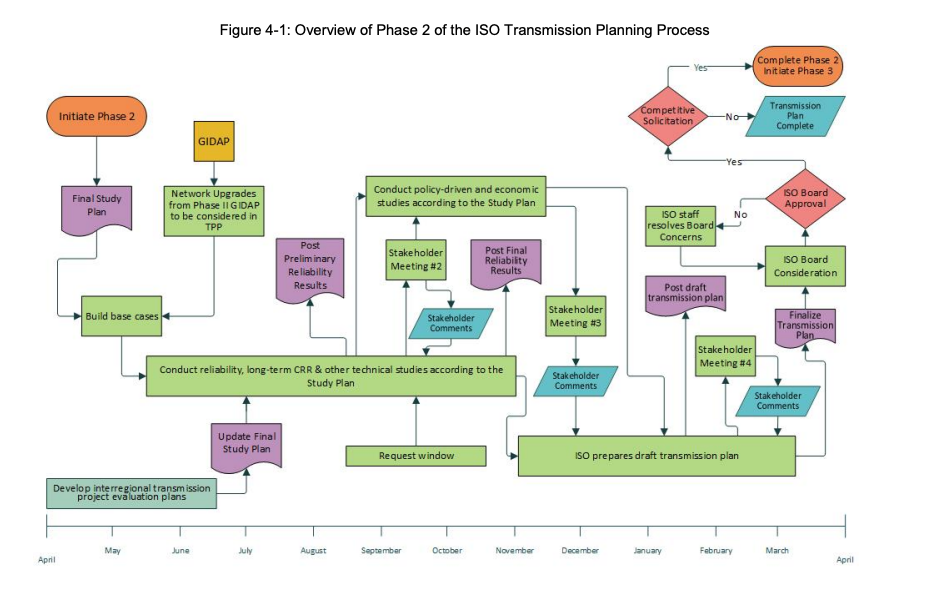
Phase 2
(California Independent System Operator, 2026)
In Phase 2, CAISO conducts the technical studies and other assessments needed to identify transmission solutions. As part of this process, transmission planning participants have a 60-day window to submit project concept proposals for inclusion in the transmission plan. CAISO then uses the results of these studies, along with stakeholder input, to begin drafting the plan.
The key deliverable from Phase 2 is the Final Transmission Plan, which identifies the transmission solutions required to address the reliability needs, economic benefits, and policy-driven requirements established in Phase 1.
Phase 2 is completed when CAISO management presents the transmission plan to the CAISO Board of Governors for approval and the Board approves the plan.
Phase 3
Phase 3 begins after Phase 2 ends, but only if project(s) in the board approved transmission plan are eligible for competitive solicitation.
During Phase 3, CAISO will:
Solicit proposals to finance, build, own, operate, and maintain those regional transmission facilities
Evaluate whether proposed projects and their sponsors meet the required qualifications outlined in the key selection criteria.
Select approved project sponsor(s)
Optioneer for CAISO TPP
Optioneer's rapid routing and geospatial analysis capabilities directly support CAISO TPP participation for both the Phase 2 request window and the Phase 3 competitive solicitation.
Optioneer for CAISO Request Window
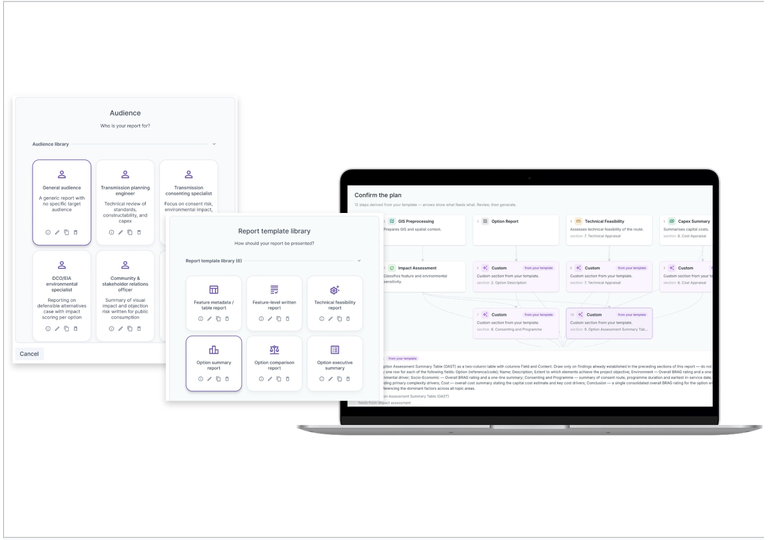
Prior to the request window, the team sets up a CAISO project space in Optioneer. The project space comes pre-loaded with publicly available federal, state, and local datasets and can be supplemented with proprietary data. Then, the team sets up a configuration based on their routing methodology. The project space is now essentially a sandbox to run routing studies across the entirety of the ISO.
After the Study Plan is released, project concepts that the system planning team identify as necessary for reliability, economic, or policy requirements can be run through Optioneer to additionally screen for feasibility based on environmental, permitting, and constructability constraints.
The team reviews the results to identify the strongest candidates to submit into the request window. Projects that are not only electrically sound, but also realistically deliverable on time and within budget.
Optioneer for Phase 3 Competitive Solicitation
Once the Transmission Plan is posted and projects are identified for competitive solicitation, the team runs a preliminary desktop routing study in Optioneer in just two hours to narrow the scope of work.
Optioneer surfaces the lowest-risk, least-impact corridors by weighing environmental, permitting, and cost constraints across thousands of data layers.
The team collaborates within the platform to refine the route, build defensible cost assumptions, and submit a competitive proposal.
.png)
.jpg)