.png)
.jpg)
Read article
As UK water companies transition toward WRMP29 and PR29, the planning environment for water transfer pipelines is undergoing a fundamental shift.
Regulatory scrutiny is higher. Cost stability expectations are tighter. And the tolerance for post-submission scope movement—traditionally a "given" in complex infrastructure—is significantly lower.
Yet, many transfer schemes are still developed using a legacy linear model: define a preferred corridor early, refine it progressively, and address constraints only as they emerge. On paper, this looks efficient. In practice, it often embeds avoidable, systemic risk.
Traditional pipeline route development typically follows a familiar, reactive pattern:
This model was functional in earlier WRMP cycles when expectations around cost certainty were less stringent. Today, the issue isn’t that routes evolve—they always will. The issue is committing too early to a single corridor without systematically stress-testing credible alternatives.
When only one route is developed in depth, critical trade-offs between cost, environmental exposure, and constructability are often surfaced far too late. At that point, changes affect more than just alignment drawings—they destabilise funding envelopes, affordability modelling, and overall programme confidence.
The result? Significant cost movement risk.
Water transfer pipelines intersect a volatile landscape of constraints: flood risks, designated lands (SSSI/AONB), agricultural quality, buried utilities, and complex stakeholder interests.
If these factors are not comparatively evaluated across multiple viable corridors at the outset, issues emerge downstream—during detailed modelling, regulatory engagement, or delivery mobilisation.
Under WRMP29, timing is everything. Regulators expect cost assumptions to remain stable into PR29. Material shifts after submission create affordability pressure and weaken the perceived robustness of early-stage optioneering. Furthermore, companies must now demonstrate a structured evaluation of reasonable alternatives. A single route, refined over time, makes it difficult to evidence that broader options were ever genuinely assessed.
Single-route development also creates friction during the handover to delivery partners. When teams receive a route that hasn’t been tested against structured alternatives, assumptions are frequently revisited. Engineering and environmental specialists may reopen corridor choices, leading to:
This isn’t a failure of talent; it’s a process constraint. If route selection logic isn’t transparent and comparative from day one, confidence erodes the moment the spade hits the dirt.
The solution isn't simply "more design time." It is a structural change in how we approach early-stage optioneering.
Rather than developing one preferred corridor reactively, infrastructure teams should generate "Route Families"—exploring multiple viable corridors in parallel. This enables:
The objective isn’t to eliminate change; it’s to reduce the magnitude and "shock" of change later in the cycle.

The hidden cost of single-route planning isn’t found in consultant fees—it’s found in the cumulative impact of revisiting decisions during delivery and adjusting funding assumptions after submission.
As WRMP29 schemes grow in complexity, the "mostly right" approach is no longer enough. Cost confidence now depends on exploring broadly before committing narrowly.
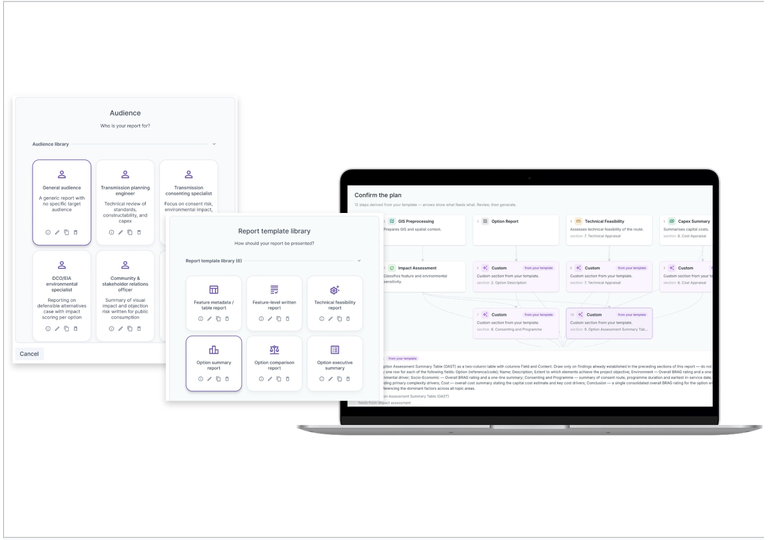
Optioneer by Continuum Industries is an automated option assessment platform designed to facilitate this shift. By moving away from "black box" linear planning, Optioneer empowers in-house teams to:
And in a regulatory environment defined by tighter tolerance and higher scrutiny, structured multi-route optioneering is becoming less of an innovation - and more of a necessity.
.png)