.png)
.jpg)
Read article

The North American electric grid is the largest machine ever built, but it is currently facing a pressure test unlike any in its history. A convergence of forces - rapid industrial electrification, the explosion of energy-intensive data centers, and the transition to remote renewable generation - has created a new reality. According to the North American Electric Reliability Corporation (NERC), peak electricity demand is projected to rise by nearly 17% over the next decade.
Meeting this challenge requires more than just new poles and wires; it requires a fundamental shift in how we plan, build, and operate grid infrastructure. A new whitepaper commissioned by WIRES and authored by London Economics International (LEI) provides a comprehensive roadmap for this transition. Titled "Use of Advanced Transmission Technologies and Innovative Practices in Power Systems," the report introduces the "ATT+" universe-a holistic approach combining hardware, software, and novel business practices to break through the grid’s bottlenecks.
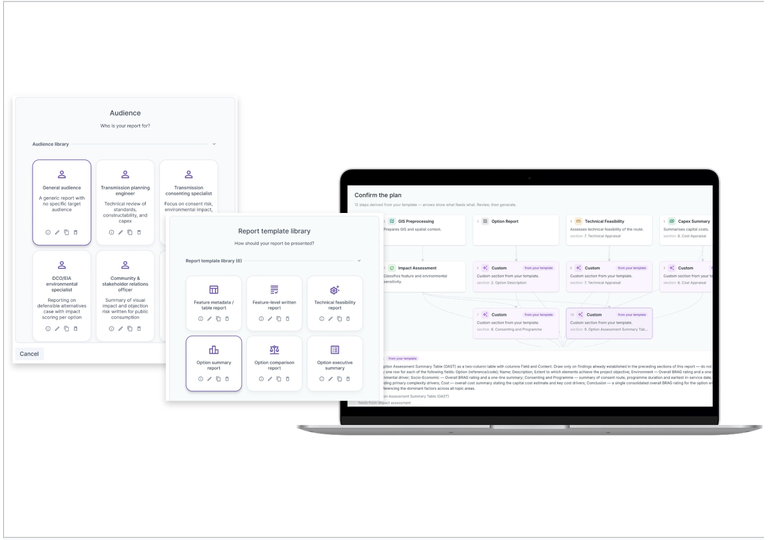
The most critical delays in transmission development often occur before a single shovel hits the ground. The "Siting and Design" phase is fraught with regulatory hurdles and stakeholder opposition. The LEI report identifies Artificial Intelligence (AI) as a transformative "Innovative Practice" for this stage, explicitly highlighting Continuum Industries and its Optioneer engine as a leading solution.
Traditionally, routing a transmission line was a linear, manual process limited to evaluating a handful of options. If a fatal flaw was found late in the game, developers had to start over. Optioneer changes this dynamic by using AI to analyze millions of potential routes simultaneously. It weighs competing constraints - engineering feasibility, environmental impact, cost, and social factors - in real-time.
The report notes that tools like Optioneer enable a "complete and robust assessment" of corridors much faster than traditional methods. By visualizing trade-offs instantly, developers can engage communities earlier and with greater transparency. The efficiency gains are stark; for example, infrastructure developers using Optioneer have reported reducing route planning timelines by as much as 93%, allowing teams to focus on strategic decision-making rather than data churning.
Once a project is permitted, the focus shifts to construction, where physical constraints often drive up costs and timelines. The LEI report details several innovative practices that are helping utilities build faster and with a lighter footprint:
The final piece of the ATT+ puzzle is operations. How do we push more electrons through the existing network? The report emphasizes Grid Enhancing Technologies (GETs) and advanced hardware:
The WIRES/LEI report makes it clear that the technology to modernize the grid exists today. However, barriers remain. The industry's natural conservatism and a regulatory focus on short-term costs often stifle innovation.
To unlock the full potential of the ATT+ universe, the report recommends key policy changes: fostering collaborative pilot programs among utilities, adopting long-term planning horizons (20+ years), and creating "regulatory sandboxes" where new tech can be tested without punitive risk. By embracing these tools - from the AI-driven foresight of Optioneer to the physical resilience of advanced conductors - we can build a grid capable of powering the 21st-century economy.
For more information and to access the full report, please visit the WIRES website.