.jpg)
Read article
As the energy transition accelerates, long‑range transmission projects have become essential infrastructure. They are the backbone that connects new generation, supports reliability, and enables decarbonization at scale. But as recent developments in the Midcontinent Independent System Operator (MISO) region show, building this infrastructure is becoming more complex, more expensive, and more scrutinized than ever before.
Stakeholders across the transmission system are now asking a hard question: if cost overruns are becoming increasingly common, how do we plan, design, and deliver transmission more effectively?
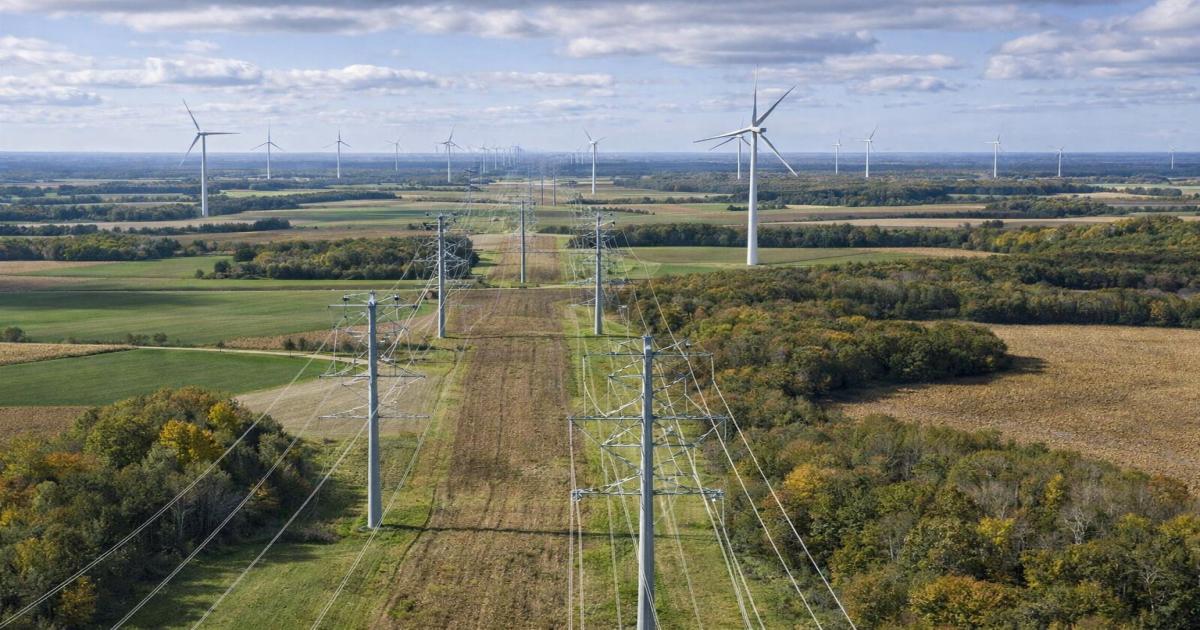
MISO is currently reviewing multiple long‑range transmission projects that have significantly exceeded their original cost estimates. One prominent example is a 345‑kV transmission line in Minnesota that saw its projected cost increase by more than 40%, rising from under $1 billion to nearly $1.4 billion. Developers cited familiar but formidable challenges: escalating labor and materials costs, routing changes driven by permitting and land‑use considerations, and engineering refinements that only emerge as projects move from concept to detailed design.
While none of these factors are new, their combined impact is increasingly difficult to absorb.
From a stakeholder perspective, cost overruns are not just accounting issues. They have real consequences.
For customers, higher project costs translate into higher rates over decades. For regulators, they raise questions about oversight, accountability, and whether existing planning processes are sufficiently robust. For system operators, overruns can erode confidence in long‑range planning portfolios that are intended to guide billions of dollars of investment.
In MISO’s case, stakeholders have pointed out that warning signs often appear earlier than formal reviews are triggered. Cost ranges shared during state‑level proceedings, early permitting signals, or emerging supply‑chain pressures may all hint at future escalation well before a project formally crosses a variance threshold.
This has led to calls for tighter variance analysis triggers, greater transparency, and earlier intervention, all aimed at avoiding unpleasant surprises late in the development cycle.
Long‑range transmission planning is, by definition, an exercise in uncertainty. Projects are scoped years before construction, often based on high‑level routing assumptions, conceptual designs, and cost models that cannot fully capture local constraints.
What is becoming clear is that traditional planning approaches — spreadsheets, static models, and disconnected workflows — are struggling to keep pace with today’s complexity.
Stakeholders are not necessarily asking for perfect foresight. Rather, they are asking for:
This is where emerging technologies are beginning to play a meaningful role.
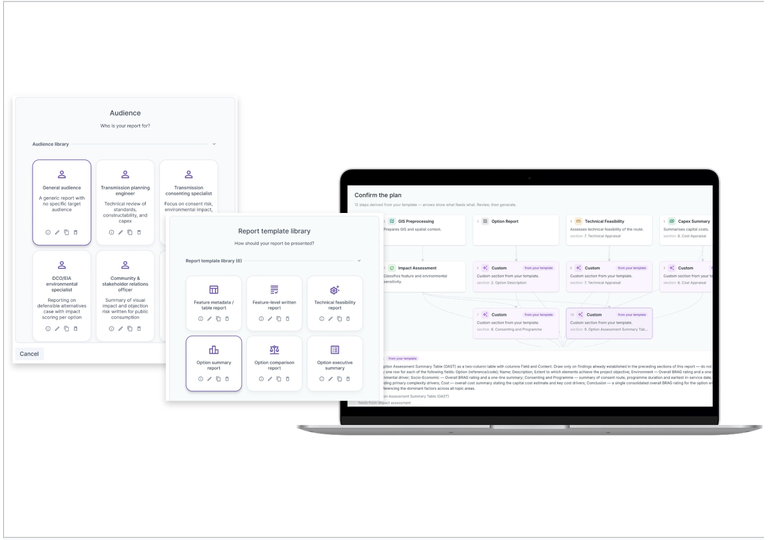
Advanced planning and optimization platforms, like Optioneer, are designed to address exactly these challenges.
Instead of treating routing, cost estimation, and system performance as separate steps, tools like Optioneer integrate them into a single, data‑driven workflow. By combining geospatial data, engineering rules, and power system analysis, planners can explore thousands of feasible alternatives, not just a handful of manually defined options.
This approach enables several key improvements:
The discussions unfolding at MISO reflect a broader shift happening across the industry. As transmission investment scales up, the tolerance for late‑stage surprises is shrinking. Regulators and customers want confidence that projects are not only necessary, but also thoughtfully designed and responsibly costed.
Long‑range transmission remains indispensable to the future of the grid. The challenge is not whether to build it, but how to build it smarter.
As stakeholders push for sharper cost estimation, tighter oversight, and greater transparency, the tools and methods used in planning will matter more than ever. Emerging technologies like Optioneer point toward a future where transmission planning is more adaptive, more defensible, and better aligned with the realities on the ground.
In an era of unprecedented investment, that shift could make the difference between projects that struggle under the weight of uncertainty and those that deliver lasting value.