.jpg)
Read article
The Problem with Static Regulations Regulatory frameworks, such as the UK’s Electricity Transmission Design Principles (ETDP), are essential for ensuring that infrastructure is designed responsibly. They cover everything from technical needs (SP1) to environmental protection (SP2) and economic efficiency (SP3).
However, when these principles live in static PDF documents, they are prone to inconsistent interpretation. Demonstrating compliance requires laborious manual checks, and proving that a chosen route is truly the "best" option often involves battling subjective opinions rather than presenting objective data.
The Solution: "ETDP-as-Code" The future of compliant planning lies in making regulations machine-readable. By codifying principles directly into AI routing platforms, we turn static text into active algorithms. This concept, known as "ETDP-as-code," ensures that every generated option automatically adheres to the rules—or flags a clear justification when it doesn't.
How It Works: Principles in Practice Here is how abstract principles translate into automated logic:
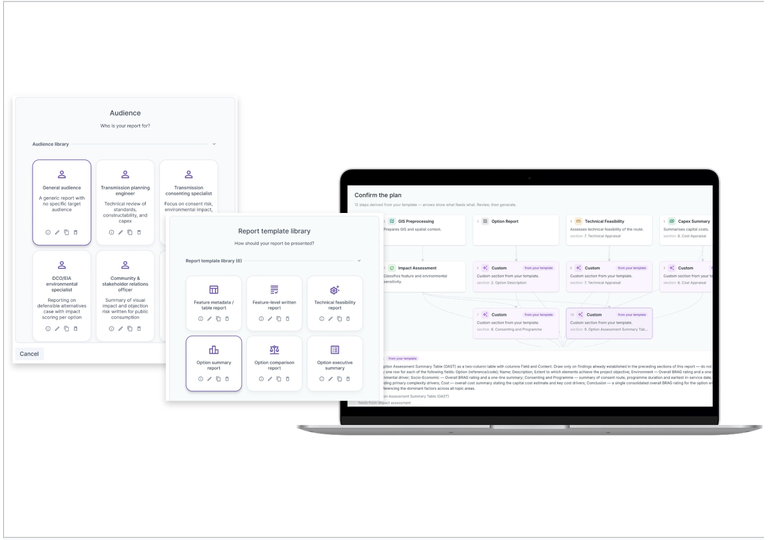
Benefits for Regulators and Developers For regulators like Ofgem and DESNZ, this approach transforms the review process. Instead of wading through disparate documents, they receive Standardized Evidence Bundles. Every submission uses the same Red-Amber-Green rankings, cost metrics, and deviation logs, allowing for true "apples-to-apples" comparison across different Transmission Owners.
For developers, it provides a "presumption of compliance." By using a NESO-owned template pack, they can ensure their designs meet the minimum standards before they even leave the drafting desk.
The Roadmap to Adoption Transitioning to this model is faster than you might think. A typical adoption path—from authoring the templates to running full pilots—takes just 12 to 18 weeks. The result is a system where over 90% of submissions carry no bespoke methods, streamlining the path to consent.