From network strategy to pipeline routing.
Whether you’re planning a national hydrogen backbone, routing CO₂ to storage, or assessing gas network repurposing — Optioneer gives pipeline developers and network operators the spatial intelligence to move from strategy to preferred alignment.
km of strategic hydrogen corridors assessed
time reduction in pipeline routing exercises
assessed repurposing vs new-build with Optioneer
Teams supported
Every team member — internal and external — works in the same project environment, from strategy to consent.

Network Strategy & Investment

Pipeline Engineering & GIS

Environment & Permitting

Safety & Compliance

Commercial & Development
Platform highlights
Explore some core Hydrogen & CO₂ Networks features of Optioneer. Visit our Platform page for a full, comprehensive overview of Optioneer’s capabilities.

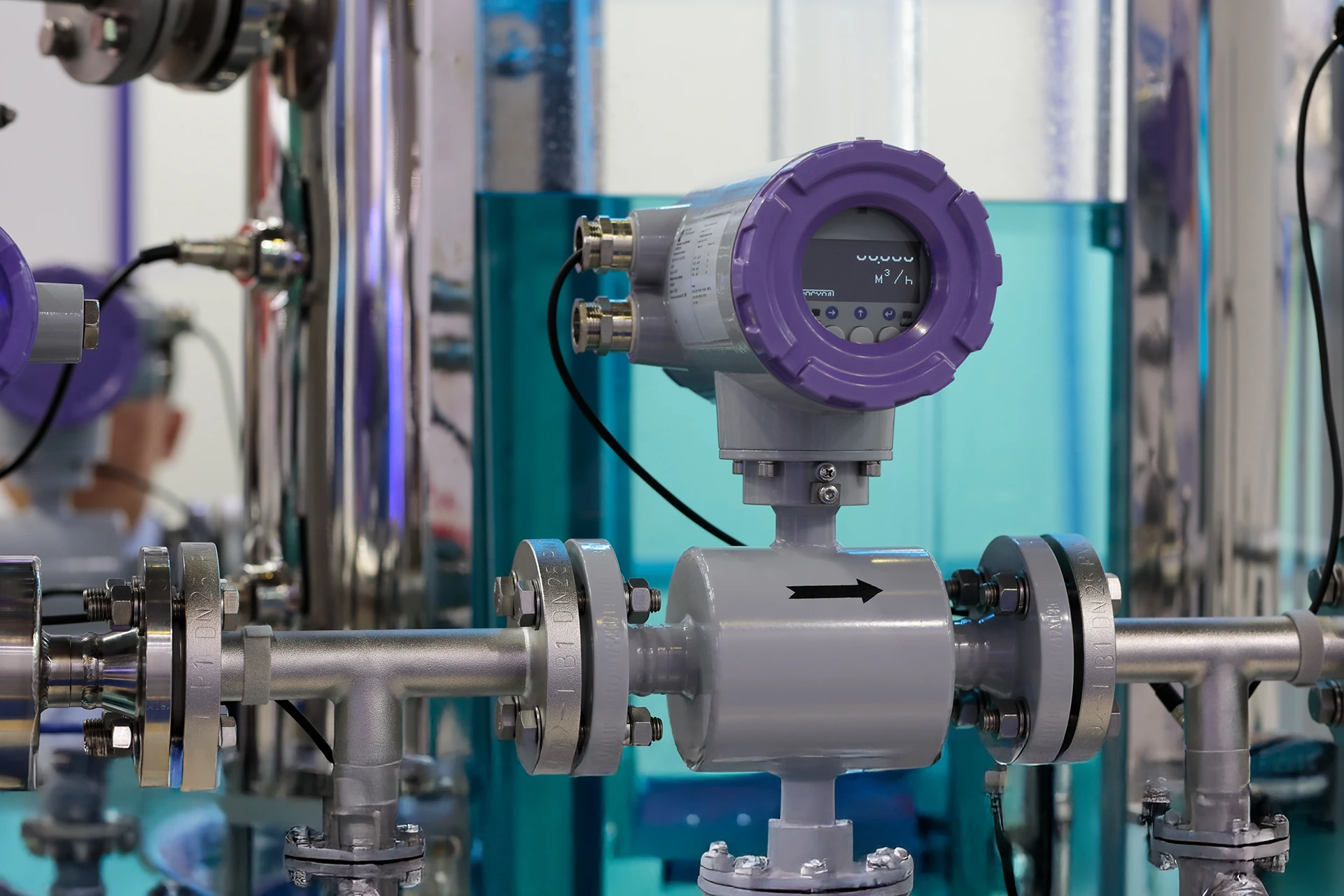
Screening for Gas, hydrogen & CO2 pipelines.
Scale hydrogen infrastructure by unifying strategic planning with asset repurposing. Compare new-build and existing corridors instantly using data-driven evidence aligned with global standards.
Strategic hydrogen network planning
Evaluate future network reinforcement and expansion needs across a territory, comparing connection scenarios, phasing, and investment timing for hydrogen production, transport, and end-use. Analyze at national or regional scale — not just individual project routing.
Country wide hydrogen networking
Optioneer directly supports Regional Clean Hydrogen Hub (H2Hub) infrastructure planning. Seven federally-funded hubs — ARCHES, PNWH2, ARCH2, HyVelocity, Heartland, MACH2, Gulf Coast — each need pipeline connections from production to end-use. Optioneer accelerates corridor identification that unlocks Section 45V tax credit value.

Gas network repurposing assessment
Evaluate whether existing natural gas pipeline corridors can be repurposed for hydrogen service, comparing repurposing vs new-build scenarios based on material compatibility, capacity requirements, safety setbacks, and spatial constraints.
Three British gas utilities assessed their existing networks using Optioneer to understand repurposing vs building new pipelines, informing the shape of their future hydrogen network.
Scenario comparison — repurposing vs new-build scenario comparison on the same constraint baseline
Material compatibility — steel grades, polyethylene, hydrogen embrittlement risk
Safety setback analysis — Building Proximity Distance (BPD) and IGEM/TD/1 safety setback analysis
Existing AGI — (Above Ground Installation) assessment
Development for Gas, hydrogen & CO2 pipelines.
Accelerate hydrogen and CO2 pipeline development with data-driven alignments that reduce routing time by up to 93%. Optioneer unifies constraint mapping and multi-criteria optimization to deliver permit-ready routes with a complete, auditable evidence trail for global regulators.
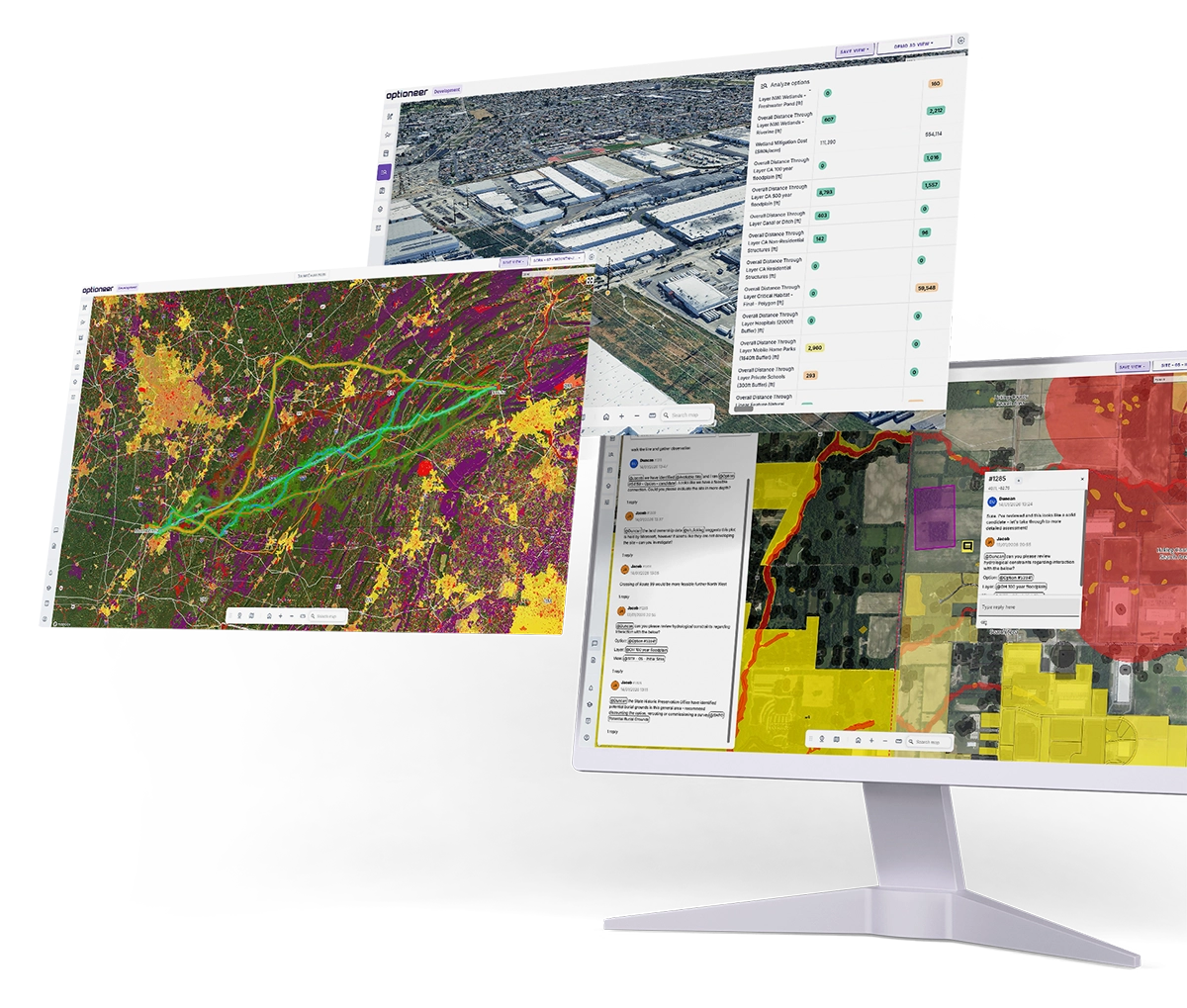
Constraint & risk mapping
97% of the data required for a routing exercise is already in the platform, drawn from 13,000+ datasets. For hydrogen and CO₂ pipelines, specific constraint layers include:
Building Proximity Distance (BPD) zones and population density buffers
Existing pipeline corridors and rights-of-way (for paralleling or repurposing)
Geological and terrain data — ground conditions, slope, flood zones
Environmental designations — protected habitats, heritage, hydrology
Existing AGI locations, compressor stations, and valve assemblies (pending availability of this data from the asset owner)
Pipeline routing and alignment
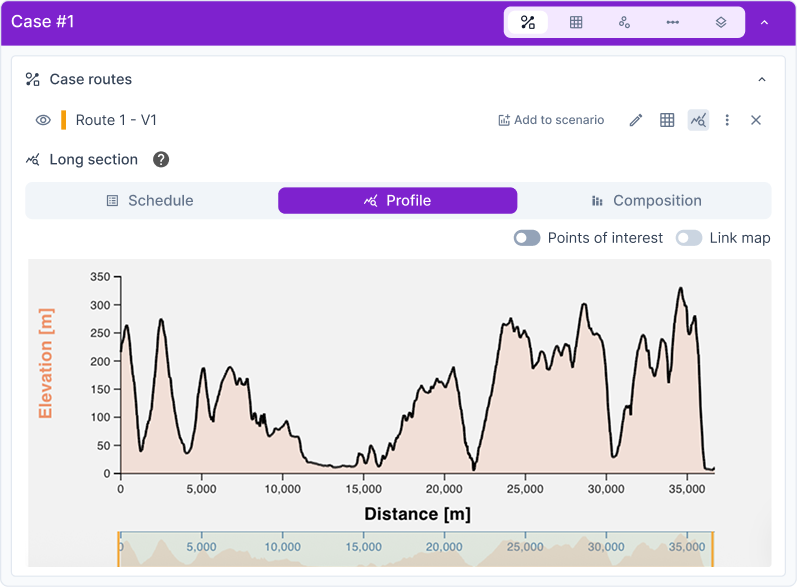
Move from strategic corridors to specific pipeline alignments, optimizing against all weighted constraints.
National Gas recorded a 93% reduction in pipeline routing time (ENA study). SGN identified initial options for the Aberdeen Vision hydrogen project in 1 week.
Asset type assessment — open-cut vs trenchless construction (HDD, microtunneling, pipe jacking)
Crossing identification — roads, railways, waterways, existing utilities
Siting — compressor station and AGI siting along the route
Existing RoW assessment — paralleling, widening, shared corridors
Construction considerations — construction access and temporary works planning

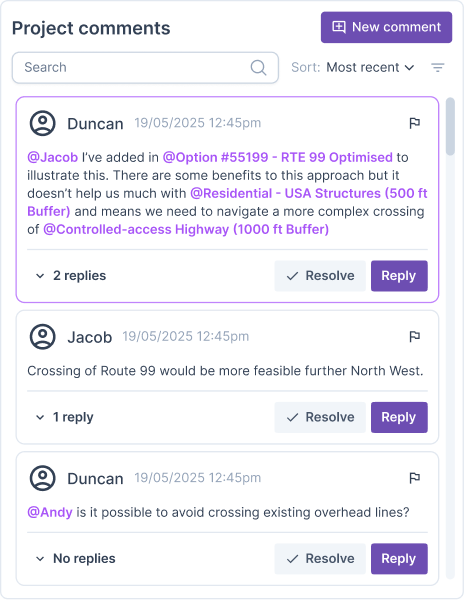
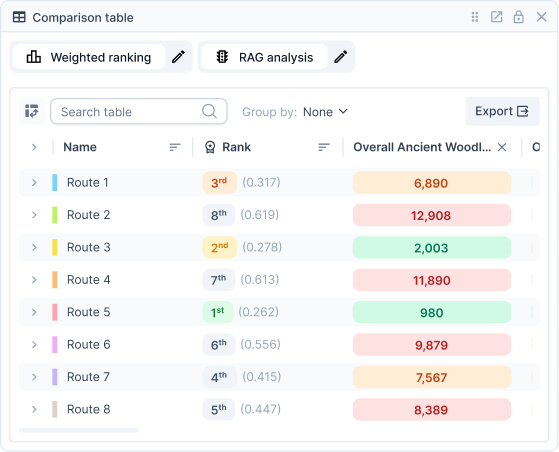
Multi-criteria option selection
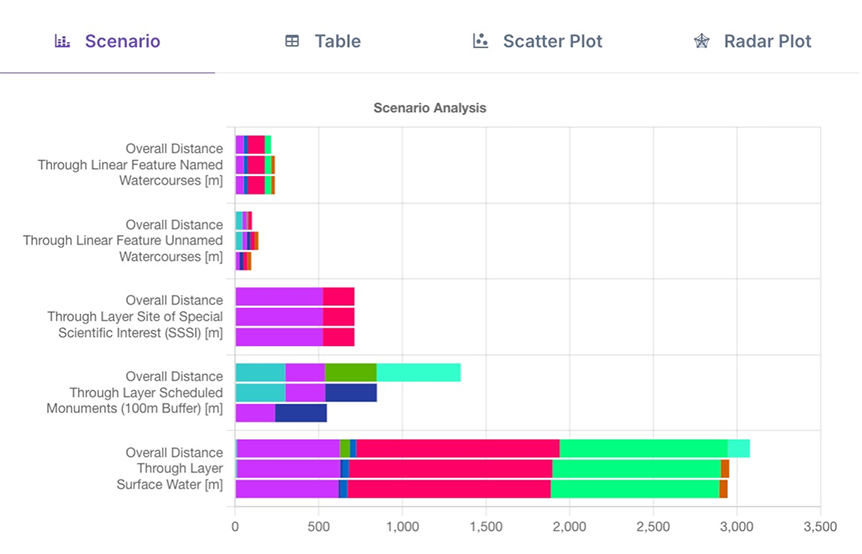
Compare routes on engineering, environmental, cost, and customer impact. Weighted ranking aligned with internal governance and regulatory expectations.
Weighted ranking & red-amber-green analysis across engineering, environmental, cost, and safety metrics
Pareto front trade-off analysis — cost vs safety vs environmental impact
CAPEX and OPEX estimates (early-stage, AACE-aligned)
Custom metrics aligned with PHMSA requirements, IGEM standards, or internal governance
Environmental assessment and permitting
Environmental constraints are part of route and site origination — not a post-hoc check.
Optioneer supports PHMSA compliance, state-level pipeline siting permits, NEPA review, and Class VI well connection assessments.
Comparative environmental risk profiles across all pipeline route options
EIA screening and scoping support — constraint maps, impact tables
Cumulative impact assessment alongside other planned developments
Automated report drafts — environmental screening, crossing schedules, permitting matrices
Complete, timestamped audit trail for regulatory defensibility

Regulation ready design
Optioneer is built to meet the world’s most stringent Gas, hydrogen & CO2 infrastructure standards, ensuring every project is auditable, compliant, and ready for funding.
Discuss your project with us.
Learn how Optioneer can accelerate your hydrogen and CO₂ infrastructure program.
Sectors
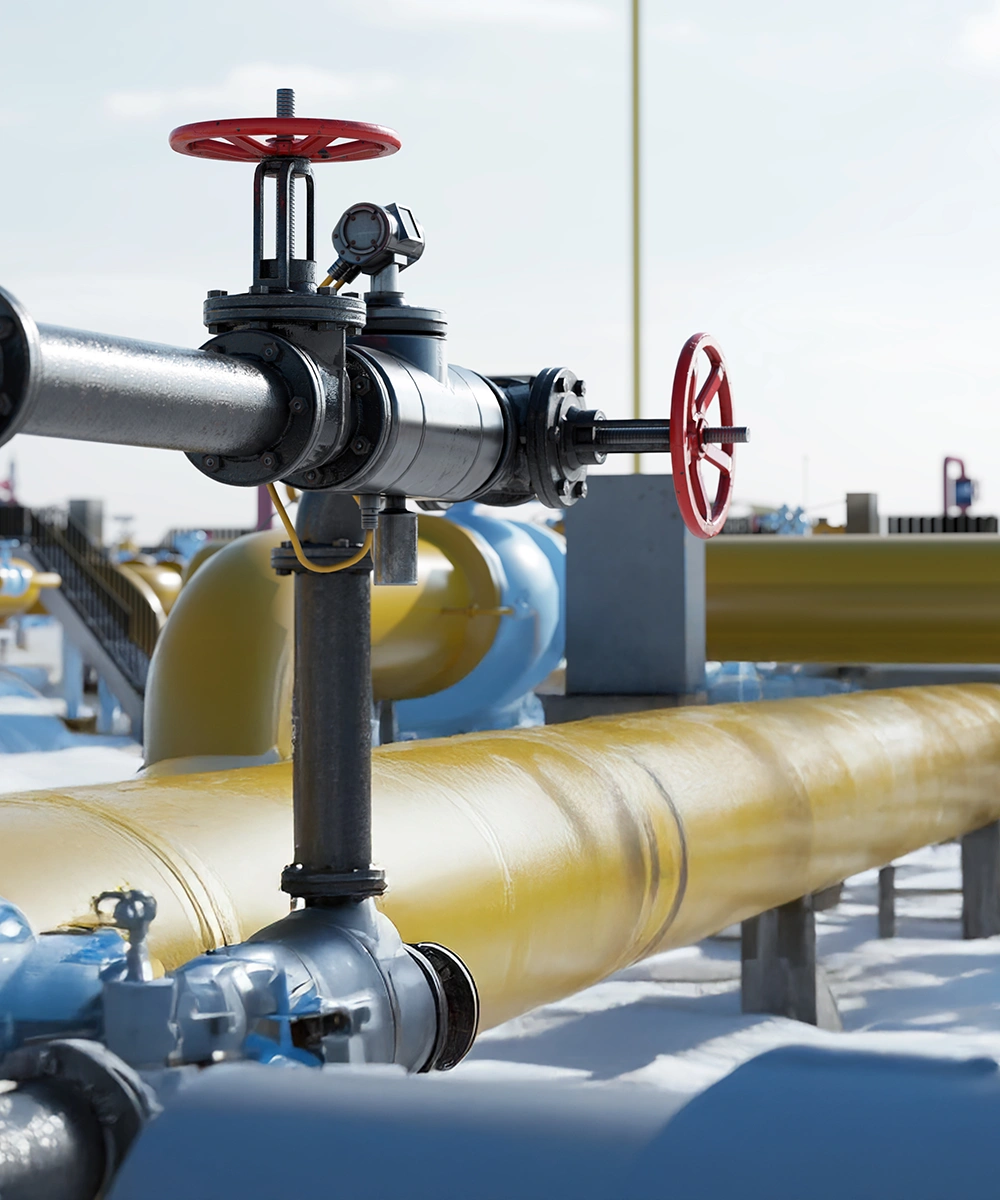
Optioneer is designed for utilities and developers in the energy and water industry. Whether you are improving existing networks or developing new, Optioneer is equipped for overhead, underground and subsea transmission, hydrogen and CO2 pipelines.




We will be in touch with you shortly.