.jpg)
Read article
The Trust Deficit Infrastructure projects often face fierce public opposition, not necessarily because the project is bad, but because the decision-making process feels opaque. When a community asks, "Why is this line going through here?" and the answer is buried in technical jargon or subjective judgment, trust erodes.
In the era of the "Great Grid Build-Out," public amenity and visual impact are top concerns. Stakeholders demand protection of their local environment, and they want to see that their concerns were factored into the design.
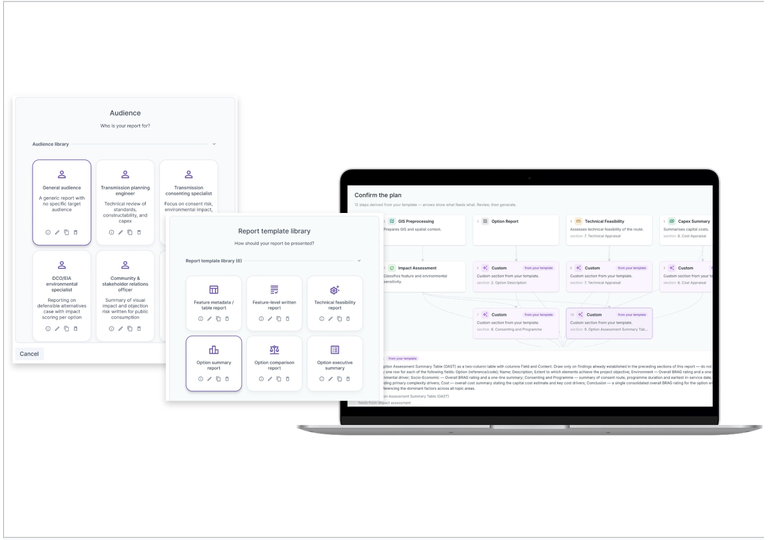
Visualizing the Trade-offs AI platforms are replacing the "Black Box" of traditional planning with a transparent "Glass Box". By using automated routing tools, developers can provide regulator-grade evidence for every choice, fostering a fact-based dialogue.
Tools for Transparency
Traceability and Auditability A key component of trust is consistency. AI ensures that the same "rules" are applied to every mile of the route. Whether it's avoiding a peatland or stepping around a village, the logic is recorded in a "justification log". This means that months or years later, during a planning examination, the team can point to the exact data and criteria that led to the decision, reducing late-stage surprises.
Conclusion We cannot build the grid of the future without public consent. By using AI to make planning transparent, rigorous, and visually comprehensible, developers can demonstrate that they have balanced technical needs with community impact — turning stakeholders from adversaries into informed participants.