.jpg)
Read article

Power networks on both sides of the Atlantic are under unprecedented pressure. Rapid growth in data centres, renewable generation, storage and electrification is driving connection requests faster than transmission and distribution systems can traditionally be planned or expanded.
For utilities and transmission owners, the challenge is no longer simply accommodating demand — it is deciding where new infrastructure should go, how it can be connected, and how to do so without compounding system risk.
In the US, thousands of data centres and large energy projects are seeking interconnection. In Europe and the UK, electrification and net-zero targets require tens of gigawatts of new capacity to be integrated into already constrained networks.
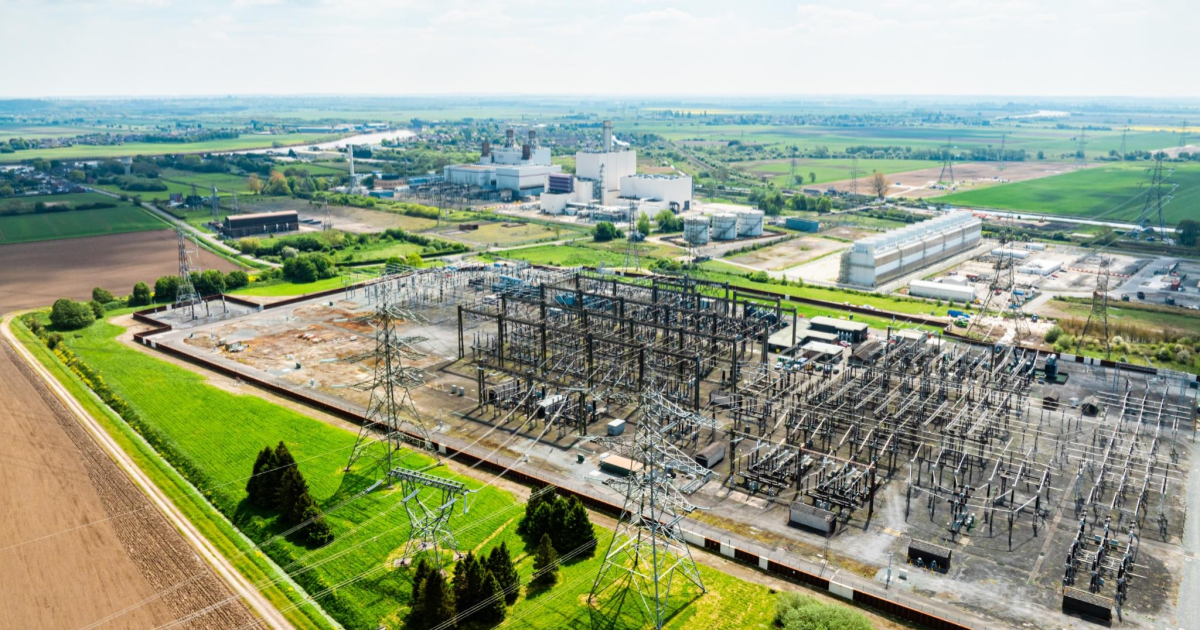
From a land-use perspective, the footprint of this infrastructure is modest. The difficulty arises once grid topology, environmental constraints, planning designations and routing corridors are considered together.
For network owners, the key constraint is not land availability, but whether new assets can be integrated efficiently into the existing system.
Grid planning has historically relied on sequential processes:
Under current demand levels, this approach is increasingly brittle.
A substation or reinforcement that looks optimal in isolation may prove problematic once:
When siting and routing are treated as downstream activities, risks surface late — affecting delivery timelines, capex and stakeholder confidence.
Utilities are increasingly shifting toward route-aware, grid-led planning.
Rather than asking “Where could new infrastructure fit?”, the more relevant questions are:
This requires evaluating sites, corridors and network connections together, not as separate exercises.
Improved visibility into grid capacity and interconnection queues helps prioritise needs, but routing feasibility ultimately determines deliverability.
For transmission and distribution owners, routing decisions directly influence:
The technically shortest route is rarely the system-optimal one. In many cases, the best outcome involves reuse or reinforcement of existing corridors and assets, provided those options are identified early in the planning process.
Without integrated tooling, evaluating these alternatives at scale is slow and resource-intensive.
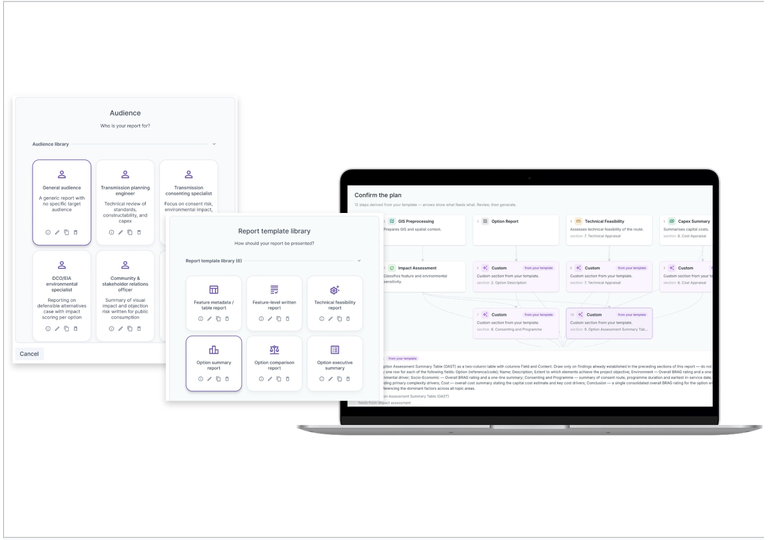
This is where modern infrastructure planning platforms, such as Optioneer by Continuum Industries, support more resilient grid development.
By combining siting and routing in a single environment, utilities can:
This approach enables earlier alignment between system planning, engineering and delivery teams.

With increasing volumes of connection requests and reinforcement needs, automation is becoming essential.
Automated siting and routing analysis allows utilities to:
The goal is not speed for its own sake, but better-informed, lower-risk network expansion.
The next wave of data centres, renewables and electrification can be accommodated — but only with more integrated, constraint-aware planning.
For utilities and transmission owners, the lesson is clear:
an asset that cannot be efficiently routed into the network is not a viable asset.
The future grid will be shaped by those who plan siting and routing together — and treat feasibility as a system-level decision from day one.